
Registry vs Mutation in Pakistan
Buying property is one of the biggest financial decisions you’ll make, whether you’re purchasing your first home, investing in a plot, or expanding your real estate portfolio. During the buying process, you’ll often hear two terms: Registry and Mutation (Inteqal).
Many people mistakenly believe these two terms mean the same thing. In reality, they are two separate legal processes, and understanding the difference is essential for protecting your ownership rights.
If you’re buying property anywhere in Pakistan—especially in Lahore and Punjab—knowing when Registry takes place, why Mutation is required, and how both work together can help you avoid legal complications and unnecessary delays.
In this guide, we’ll explain everything in simple language, including the difference between Registry and Mutation, the property transfer process, common buyer mistakes, required documents, and practical tips every buyer should know.

Suggested Image: A realistic photograph showing a buyer reviewing property documents with a registry office or land records concept. Include subtle branding without excessive typography.
Quick Answer
Registry is the legal registration of a property sale through the relevant registration authority, while Mutation (Inteqal) is the process of updating the new owner’s details in the official land records. Completing Registry alone does not automatically update government ownership records, which is why both steps are important during a property transaction in Pakistan.
Why Understanding Registry and Mutation Is Important
Every year, thousands of people buy and sell residential and commercial properties across Pakistan. While most buyers focus on the property’s location, price, and payment plan, many overlook the legal transfer process.
One of the most common misunderstandings is assuming that completing the Registry means the property transfer is fully complete. However, the ownership record also needs to be updated through the Mutation process.
Failing to understand this difference can create unnecessary complications when:
- Selling the property in the future.
- Applying for financing or loans.
- Verifying legal ownership.
- Resolving ownership disputes.
- Updating official land records.
Why This Matters
Registry and Mutation are not competing processes—they work together. Registry records the legal transaction, while Mutation updates the government’s ownership records. Completing both provides greater clarity and supports smoother future transactions.
What Is Property Registry in Pakistan?
Property Registry is the legal process of recording the sale or transfer of a property through the relevant government registration authority. During this process, the sale deed is officially registered after the applicable legal requirements, stamp duties, and documentation have been completed.
Simply put, Registry is the formal legal record that confirms a property transaction has taken place between the buyer and seller.
After Registry is completed, the buyer receives a registered sale deed, which serves as an important legal document relating to the transaction.
Purpose of Property Registry
- Legally records the property sale.
- Registers the sale deed with the relevant authority.
- Creates an official record of the transaction.
- Supports the legal transfer process.

Suggested Image: Registry office, property registration documents, e-Stamp paper, or a buyer signing official property documents.
What Is Mutation (Inteqal) in Pakistan?
Mutation, commonly known as Inteqal, is the process of updating the ownership details in the government’s land records after a property has been transferred.
While Registry records the legal transaction, Mutation ensures that the new owner’s name is reflected in the official land records maintained by the relevant land administration authority.
Think of Mutation as the step that updates the government’s ownership database after the sale has been completed.
Purpose of Mutation
- Updates official ownership records.
- Records the new owner’s name in land records.
- Supports future property transactions.
- Provides greater clarity regarding ownership history.
Suggested Image: Punjab Land Records Authority (PLRA) office, digital land records concept, or property ownership verification illustration.
Why Do People Confuse Registry and Mutation?
The confusion usually arises because both processes are completed during a property transfer, and many people assume they serve the same purpose.
In reality, they are two separate legal and administrative procedures carried out by different authorities and for different reasons.
Registry focuses on the legal documentation of the property sale, while Mutation focuses on updating ownership information within the government’s land records.
Completing one process does not automatically replace the other.
Expert Tip from The Land Sellers
Whenever you’re buying property, don’t stop after completing the Registry. Confirm that the Mutation (Inteqal) process has also been completed so that the ownership records accurately reflect the new owner. This simple verification can help prevent future complications.
Key Takeaway
Registry and Mutation are both essential parts of the property transfer process in Pakistan, but they perform different roles. Registry legally records the transaction, while Mutation updates the official ownership records. Understanding this distinction helps buyers make informed decisions and avoid unnecessary legal or administrative issues.
Coming Up Next: In the next section, we’ll compare Registry vs Mutation side by side, explaining their purpose, legal importance, required documents, government authorities, processing time, and the key differences every property buyer should understand before completing a transaction.
Where Do Registry and Mutation Fit in the Property Buying Process?
Registry and Mutation are two important stages in the property transfer process, but they do not happen at the same time.
Once the buyer and seller agree on the purchase price and complete the required documentation, the property is legally registered through the Registry process. After the Registry has been completed, the ownership details are updated in the official land records through Mutation (Inteqal).
Understanding this sequence helps buyers know what to expect and ensures that no important step is missed.
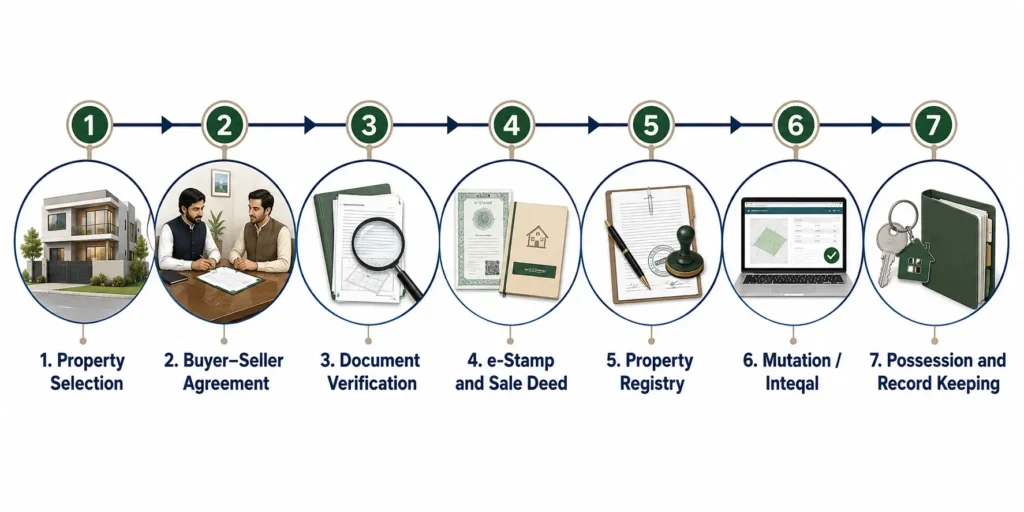
Suggested Image: A clean horizontal timeline showing the complete buying journey from agreement to ownership transfer.
Step-by-Step Property Transfer Process in Pakistan
| Step | Process | Purpose |
|---|---|---|
| 1 | Property Selection | Select a suitable property after market research and verification. |
| 2 | Agreement Between Buyer & Seller | Agree on the purchase price, payment terms and conditions. |
| 3 | Document Verification | Verify ownership records, seller identity and legal documents. |
| 4 | e-Stamping & Sale Deed Preparation | Prepare the legal transfer documents. |
| 5 | Registry | Official registration of the property transfer. |
| 6 | Mutation (Inteqal) | Update ownership in the government land records. |
| 7 | Possession & Record Keeping | Take possession and safely keep all legal documents. |
Quick Tip
Many buyers assume the process finishes after Registry. In practice, completing Mutation is equally important because it updates the government’s ownership records and supports future transactions.
Registry vs Mutation – Complete Comparison
Although Registry and Mutation are closely connected, they serve different legal and administrative purposes.
| Feature | Registry | Mutation (Inteqal) |
|---|---|---|
| Primary Purpose | Legally records the property sale. | Updates ownership in official land records. |
| Completed By | Registration Authority. | Land Revenue / Land Records Authority. |
| When It Happens | During the property transfer. | After Registry has been completed. |
| Main Objective | Create a legal record of the sale. | Update government ownership records. |
| Legal Importance | Records the transfer deed. | Records the new owner in land records. |
| Required During Future Sale? | Yes. | Yes. |
| Government Record Updated? | No. | Yes. |
Documents Commonly Required
The exact documentation may vary depending on the province, housing society and nature of the transaction. However, buyers are generally asked to provide the following documents.
| Document | Why It Is Required |
|---|---|
| Original Sale Deed | Evidence of the property transaction. |
| Seller’s CNIC | Identity verification. |
| Buyer’s CNIC | Identity verification. |
| Passport-size Photographs | Administrative records where applicable. |
| e-Stamp Documents | Legal transfer documentation. |
| Property Ownership Documents | Verification of ownership history. |
| Supporting Revenue Documents | Required for ownership record updates where applicable. |
💡 Good Practice
Before submitting documents, make sure all names, CNIC numbers, property measurements and ownership details match across every document. Small discrepancies can delay the transfer process.
A Practical Example
Imagine Ahmed purchases a 5 Marla house in Lahore.
After agreeing on the price, both parties prepare the sale documents and complete the Registry through the relevant registration authority.
If Ahmed stops there, the sale has been legally recorded, but the ownership records may still require updating through Mutation.
Once Mutation (Inteqal) is completed, the official land records are updated to reflect Ahmed as the new owner, making future verification and transactions much smoother.
Suggested Image: Buyer receiving property documents after completing the legal transfer process.
Expert Tip from The Land Sellers
Whenever you purchase property, ask your property consultant or the relevant authority to confirm that both the Registry and Mutation processes have been completed successfully. This simple step can save significant time and avoid complications when you decide to sell, transfer or verify the property in the future.
Key Takeaway
Registry and Mutation should be viewed as two connected stages of the same ownership transfer process. Registry legally records the transaction, while Mutation updates the official land records. Completing both helps ensure your ownership is properly documented and easier to verify in future property transactions.
Coming Up Next: In the final section, we’ll discuss the most common Registry and Mutation mistakes, answer frequently asked questions, explain how to verify ownership records, and provide official government resources that every property buyer in Pakistan should know.
Common Mistakes Buyers Make During Registry and Mutation
Buying property is a major financial decision, and even small mistakes during the transfer process can create unnecessary delays or legal complications later. Understanding the Registry and Mutation process helps buyers make informed decisions and avoid common problems.
1. Assuming Registry Completes the Entire Transfer Process
Many first-time buyers believe that once the sale deed has been registered, nothing else is required. In practice, buyers should also ensure that the ownership records are updated through the Mutation (Inteqal) process where applicable.
2. Not Verifying Property Ownership Before Purchase
Always verify the property’s ownership records before making full payment. This helps confirm that the seller has the legal authority to transfer the property and reduces the risk of future disputes.
3. Ignoring Document Verification
Incorrect names, CNIC numbers, property measurements or survey details can delay the transfer process. Carefully review every document before signing.
4. Making Full Payment Before Completing Due Diligence
Buyers should complete legal verification and document checks before releasing the final payment whenever possible.
5. Not Keeping Copies of Important Documents
Maintain organised copies of the sale agreement, registered sale deed, e-Stamp documents, payment receipts and any documents issued during the Mutation process. These records may be useful for future transactions or verification.
Suggested Image: Buyer and property consultant reviewing legal documents before completing the transaction.
Property Buyer’s Checklist Before Completing Registry and Mutation
Use the following checklist before finalising your property purchase.
| Checklist Item | Status |
|---|---|
| Verified seller’s identity and ownership documents | ☐ |
| Verified property details and measurements | ☐ |
| Reviewed all legal documents carefully | ☐ |
| Completed Registry through the relevant authority | ☐ |
| Confirmed Mutation (Inteqal) process where applicable | ☐ |
| Collected copies of all legal documents | ☐ |
| Safely stored payment receipts and supporting documents | ☐ |
Buying Tip
Every property transaction is different. If you’re purchasing property in a private housing society, cooperative society or another province, confirm the applicable transfer requirements with the relevant authority before completing the transaction.
Frequently Asked Questions (FAQs)
1. What is the difference between Registry and Mutation in Pakistan?
Registry records the legal property transaction through the relevant registration authority, while Mutation (Inteqal) updates the ownership information in the official land records maintained by the relevant land administration authority.
2. Is Registry enough when buying property?
Registry is an important step in the transfer process. Buyers should also confirm whether Mutation or any additional ownership update is required for their property type and jurisdiction.
3. Which comes first, Registry or Mutation?
In a typical property transaction, Registry is completed first, followed by the Mutation process.
4. Can I verify property ownership before buying?
Yes. Buyers should verify ownership records, review supporting documents and, where available, use the relevant land record verification services before making the final payment.
5. Who is responsible for completing Mutation?
The exact procedure may vary depending on the province or property type. Buyers should confirm the applicable process with the relevant land records authority or housing society.
6. How long does the Registry and Mutation process take?
Processing times vary depending on the province, documentation, property type and workload of the relevant authority. Buyers should confirm the expected timeline with the concerned office.
7. Are Registry and Mutation charges the same?
No. Different government charges and fees may apply to Registry, stamp duty, taxes and Mutation depending on the applicable laws and the property’s location.
8. Where can I verify official land records in Punjab?
Property buyers in Punjab can use the Punjab Land Records Authority (PLRA) services or visit the relevant Arazi Record Centre for property verification and ownership-related information.
Official Resources
Before completing any property transaction, always rely on official government sources for the latest procedures, fees and legal requirements.
- Punjab Land Records Authority (PLRA)
- Punjab Board of Revenue
- Punjab e-Stamping Services
- Federal Board of Revenue (FBR)
Government procedures and applicable charges may change over time, so always verify the latest information before making any property-related decision.
Related Property Guides
If you found this guide helpful, you may also like:
- Property Tax Guide Pakistan: Understand government taxes, transfer charges and property buying costs in Pakistan.
- Property Transfer Charges in Pakistan: Learn about stamp duty, registration charges and other government fees. (Coming Soon)
- Green Property Certificate Punjab: Everything buyers should know before purchasing property. (Coming Soon)
- Property Buying Checklist Pakistan: A practical checklist for first-time buyers. (Coming Soon)
Final Thoughts
Understanding the difference between Registry and Mutation is an important part of buying property in Pakistan. While Registry records the legal transaction, Mutation updates the official ownership records where applicable. Completing both processes correctly and keeping accurate documentation can make future property transactions smoother and help reduce avoidable complications.
Whether you’re buying your first home, investing in a residential plot or purchasing commercial property, taking time to understand the legal transfer process can help you make informed decisions and protect your investment.
Need Professional Property Guidance?
The Land Sellers helps buyers make informed property decisions through transparent advice, verified projects and practical buying guidance. Explore our latest property resources or contact our team if you need assistance with your next property investment.
Disclaimer: This article is provided for general educational purposes only and should not be considered legal, tax or financial advice. Property laws, transfer procedures and applicable government charges may vary by province, property type and future regulatory updates. Always consult the relevant government authority or a qualified legal professional before making any property transaction.